
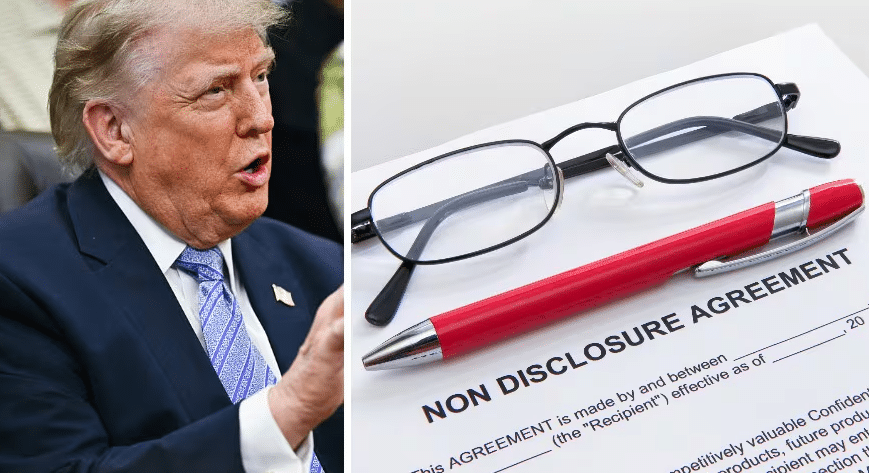
The Trump administration is moving to require all current and future federal employees to sign nondisclosure agreements as part of a broader effort to tighten controls on leaks of non-public government information.
The move comes as part of a wider push that officials have linked to recent media leaks involving sensitive national security matters, including reporting on U.S. military operations and internal assessments tied to the Iran war and earlier Venezuela-related operations.
A proposed notice posted Tuesday on the Office of Personnel Management website and expected to be published in the Federal Register seeks public comment on a draft NDA that could apply to both new and existing employees across federal agencies.
The form is intended to document employees’ acknowledgment of existing legal obligations to protect confidential, proprietary, or otherwise non-public information obtained through their official duties while preserving lawful whistleblower protections.
The proposal also asks agencies to weigh whether the NDA should apply only to unclassified material and what penalties should apply to employees who refuse to sign.
OPM said it was responding in part to what it described as “several recent instances” of unauthorized disclosures involving internal agency communications related to rulemaking and policy development.
The notice specifically cited cases in which FBI and Department of Homeland Security personnel allegedly disclosed details about planned immigration enforcement actions without authorization.
The push comes as the administration continues an intensified crackdown on leaks, including high-profile disclosures involving national security and military operations.
That effort has increasingly overlapped with investigations tied to reporting on the Iran war, where officials have raised concerns about unauthorized disclosures of sensitive war planning, internal deliberations, and post-strike assessments of U.S. operations.
According to reporting citing administration officials, President Donald Trump has privately pressed senior Justice Department leadership to aggressively pursue individuals responsible for leaking information related to Iran military operations, including details that officials say revealed internal debates and early intelligence assessments of strike effectiveness.
Some of those disclosures reportedly involved Pentagon warnings about the risks of an extended campaign and reporting on damage assessments that undercut the administration’s public claims about the scope of the strikes.
Other reports have described internal concern over the release of information related to classified or sensitive evaluations of Iran’s remaining military capabilities following U.S. operations, as well as earlier reporting tied to Venezuela-related military planning and operations.
The leak investigations have also reportedly included discussions about whether media organizations should be compelled to provide records or testimony in order to identify government sources behind the disclosures.
Journalists and press freedom advocates have warned that such steps, combined with broader leak prosecutions, could chill reporting on wartime decision-making and national security policy.
The administration has defended its approach as necessary to protect classified information, safeguard troops, and prevent unauthorized disclosures that could compromise operations.
The OPM proposal also highlights tensions inside the federal workforce over transparency rules and discipline, noting the balance between safeguarding sensitive information and preserving legally protected whistleblower activity.
The American Federation of Government Employees has criticized the NDA proposal as an attempt to silence career civil servants and expand political control over the federal bureaucracy.
Labor leaders argue the measure could deter employees from reporting waste, fraud, and abuse, while administration officials maintain it is aimed narrowly at protecting legitimate national security and policy deliberations.
Legal experts have also questioned the need for new agreements, noting that existing federal statutes already prohibit the unauthorized disclosure of classified and sensitive information, and raise questions about how additional NDAs would be enforced.